

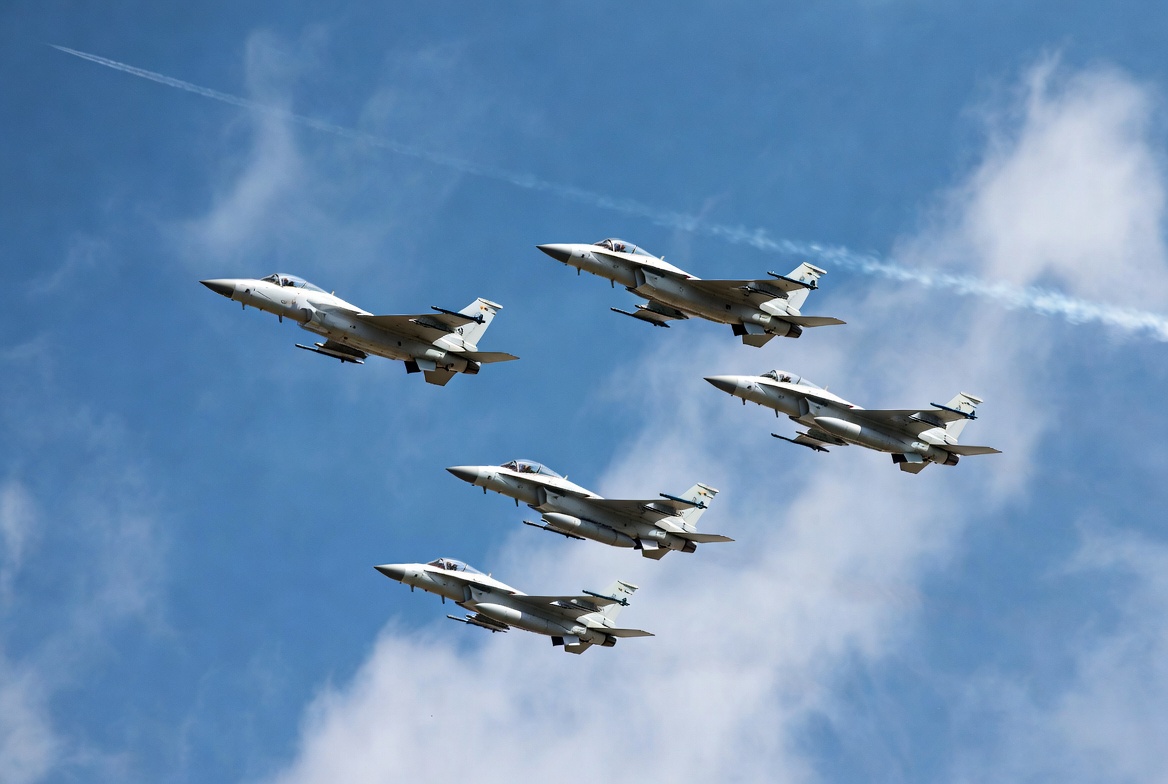
As Alberta pursues independence through a democratic referendum and subsequent negotiations, questions about national defence naturally arise. How would a new Republic of Alberta protect itself? What becomes of existing federal military assets and personnel? Would allies like the United States provide support? Historical precedents from peaceful separations, combined with Alberta’s strategic strengths, show a clear path to a capable, independent defence posture.
Forming the Alberta Defence Forces
A sovereign Alberta would establish professional defence forces tailored to our unique geography, resources, and threats—prioritising air defence, border security, cybersecurity, and disaster response.
Drawing from examples like the Czech Republic and Slovakia’s amicable division of military assets, Alberta would inherit personnel, equipment, and infrastructure through negotiation. Defence spending at 2-3% of GDP would sustain a modern force including fighters, drones, and ground components. Bilateral agreements, especially for continental defence, would provide additional security without requiring an oversized military.
Existing Canadian Armed Forces Members in Alberta
Alberta hosts thousands of serving Canadian Armed Forces members and veterans. Post-independence, they would face choices similar to those in other separations.
Constitutional lawyer Keith Wilson, K.C., addressed this directly:
“Canada would only get to keep the 3 military bases if that is what Alberta were to agree to. Canada and Alberta could agree on the value of the bases and what equip would be acquired by AB. Soldiers could be given the option of switching to AB army or moving out of AB. Doable.”
Canada would only get to keep the 3 military bases if that is what Alberta were to agree to. Canada and Alberta could agree on the value of the bases and what equip would be acquired by AB. Solders could be given the option of switching to AB army or moving out of AB. Doable.
— Keith Wilson, K.C. (@ikwilson) January 17, 2020
Many Alberta-based personnel, with deep roots here, would likely transfer to the new Alberta Defence Forces, bolstered by our veteran community.
Federal Military Bases in Alberta
Alberta is home to four key bases: CFB Edmonton, CFB Cold Lake, CFB Suffield, and CFB Wainwright.
These federal assets would be subject to negotiation. As Keith Wilson recently stated:
“Whether the 4 national parks and 4 military bases stay owned by Canada or become Alberta will be part of the negotiations.”
Whether the 4 national parks and 4 military bases stay owned by Canada or become Alberta will be part of the negotiations.
— Keith Wilson, K.C. (@ikwilson) December 24, 2025
Outcomes could include outright transfer to Alberta, leases, or shared use—particularly for NORAD obligations. Alberta’s vital role in North American defence encourages cooperative solutions.
Wilson has also clarified federal land ownership:
“Alberta’s land is mostly owned by the Alberta Government, individuals, or corporations. Only about 20% is federally owned, including National Parks, military bases, and First Nations reserves.”
Marty’s correct. Alberta’s land is mostly owned by the Alberta Government, individuals, or corporations. Only about 20% is federally owned, including National Parks, military bases, and First Nations reserves. https://t.co/2q79FRIjcM pic.twitter.com/ID7t3O5JTV
— Keith Wilson, K.C. (@ikwilson) May 2, 2025
Will the United States Provide Support?
The United States shares the world’s longest undefended border with Canada and relies heavily on Alberta’s energy exports. A stable, prosperous Alberta aligns with U.S. interests in energy security and continental defence.
Post-independence, rapid U.S. recognition is probable, potentially leading to defence partnerships. While not annexation—firmly rejected as impractical—strong bilateral ties would enhance security, similar to U.S. arrangements with other allies.
Alberta’s NORAD contributions and proximity to Alaska underscore mutual benefits in cooperation.
I’m not sure why Alberta would join NATO. A mutual defence agreement with the USA would be all that we need.
— Jeffrey Rath (@JeffreyRWRath) December 24, 2025
Alberta Army and Army-Airforce at 3% of GDP.
A fleet of water bombers, Gen 3 F-18’s, attack helicopters, a drone force and a 50,000 person combat capable ground force…
A Secure Path Forward
Independence does not mean vulnerability. Through good-faith negotiations, voluntary personnel transfers, asset agreements, and strategic alliances, Alberta would build efficient, modern defence forces.
Explore Alberta’s road to prosperity and sovereignty with the Alberta Prosperity Project at www.albertaprosperity.com.
You can download and read our Value of Freedom document here:https://t.co/s6xU8K49bc pic.twitter.com/hB9nzI56Bu
— Alberta Prosperity Project (@ABProsperityPrj) December 25, 2025
Read about our Proposed Policies and Governance for a Sovereign Alberta here: https://t.co/YBH8qQPTrZ pic.twitter.com/pVmmVPLNLB
— Alberta Prosperity Project (@ABProsperityPrj) December 25, 2025